Host city of the UITP Summit 2027, Hamburgisa global gateway for innovation, sustainability, and urbanmobility, where world-class transport meetsvisionary city planning.
Hamburg, Germany’s second-largest urban area, is a vibrant port city home to 5.4 million people. With more bridges than any other city in the world and over 16.1 million overnight stays in 2024, Hamburg stands out as a global destination.
In fact, Hamburg is Europe’s largest city that is not a national capital, yet it holds comparable economic and strategic importance. Hamburg’s port is one of Europe’s fastest growing and ranks fifth on the continent. The city hosts over many of Germany’s top 500 companies alongside a strong network of universities, research institutes, and healthcare facilities. Given this, it is no surprise that Hamburg also offers a world-class public transport system.
Public Transport System Overview
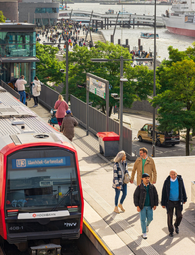
Public transport is a key pillar of Hamburg’s economic health. In 2024, the city’s largest operator, HOCHBAHN, recorded 551 million annual passenger journeys (around 1.5 million per day). While HOCHBAHN employs over 6,600 people and operates nearly 50% of services, it is one of 28 transport operators in the city. Together, they employ around 10,000 people and serve over 1 billion trips annually.
Hamburg stands out for its strong coordination between operators. Through the Hamburger Verkehrsverbund (hvv), passengers benefit from a single ticket and pricing system across the entire network – and that’s been in place since 1967. This integration is further strengthened by the city’s Mobility-as-a-Service (MaaS) app, hvv switch, which brings all transport modes together in one platform and supports multimodal mobility.
Hamburg’s climate plan aims to achieve climate neutrality by 2045. The city has set ambitious targets to reduce CO2 emissions by 70% by 2030 compared to 1990 levels and to become CO2-neutral by 2045. Mobility plays an important role in achieving this goal. Electrification is one way the city leads by example and the same can be said for investments in active modes like walking and cycling. But the key to Hamburg’s mobility transition is an investment in all shared modes.
Looking ahead, public transport ridership is expected to continue growing thanks to investment and innovation. With annual investment of around €1.37 billion in 2025, HOCHBAHN is busy transforming mobility to encourage a modal shift. This includes putting autonomous shuttles on the city’s roads by 2027 and a focus on autonomous driving in regular bus services to boost passenger numbers by 30% before 2035. Public transport is therefore not only essential to Hamburg’s economy, but also central to achieving its climate ambitions.
Key Figures
4
Suburban Railways
4
Metro Lines
200+
Bus Lines
8
Ferry Lines
10,000
Stations
4,322
Vehicles and rolling stock
16,802 km
Network Length
Upcoming Public Transport Innovations
@ Hamburger HOCHBAHN AG/Axel Heimken
U5: A New Metro Line for Hamburg
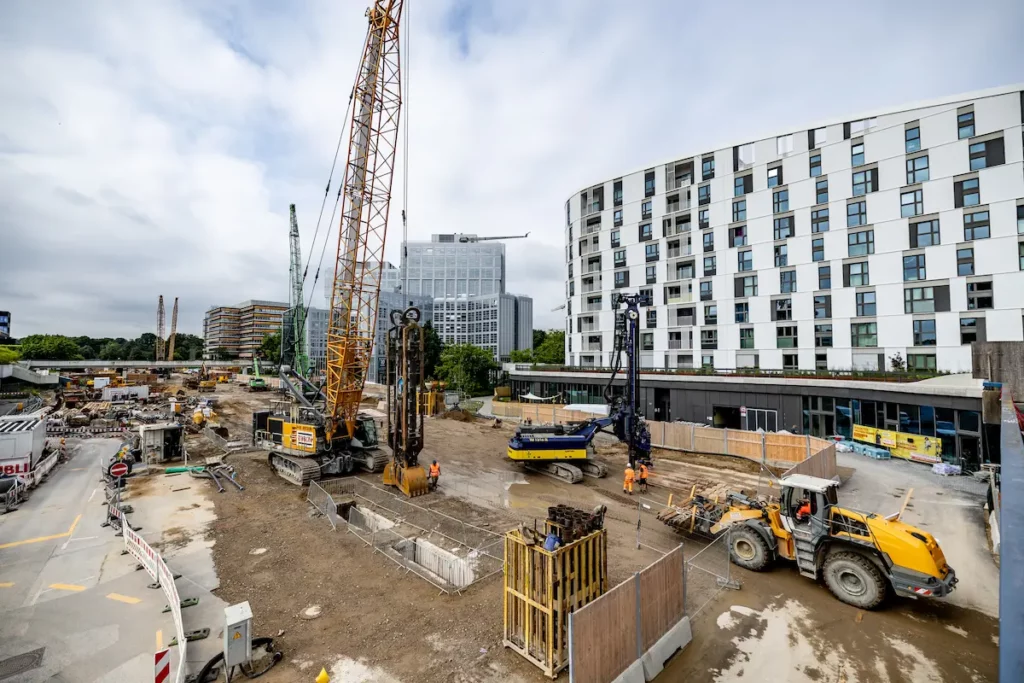
The 24 km fully automated U5 will connect key districts across Hamburg, powered by 100% green electricity. Running every 90 seconds at peak times, it is expected to serve 270,000 passengers daily.
Construction began in late 2021, with opening planned in stages between 2028 and 2035. The project also sets new standards in sustainable construction, with innovative methods expected to reduce emissions by around 70% compared to conventional approaches.
100% Zero-Emission Bus Fleet
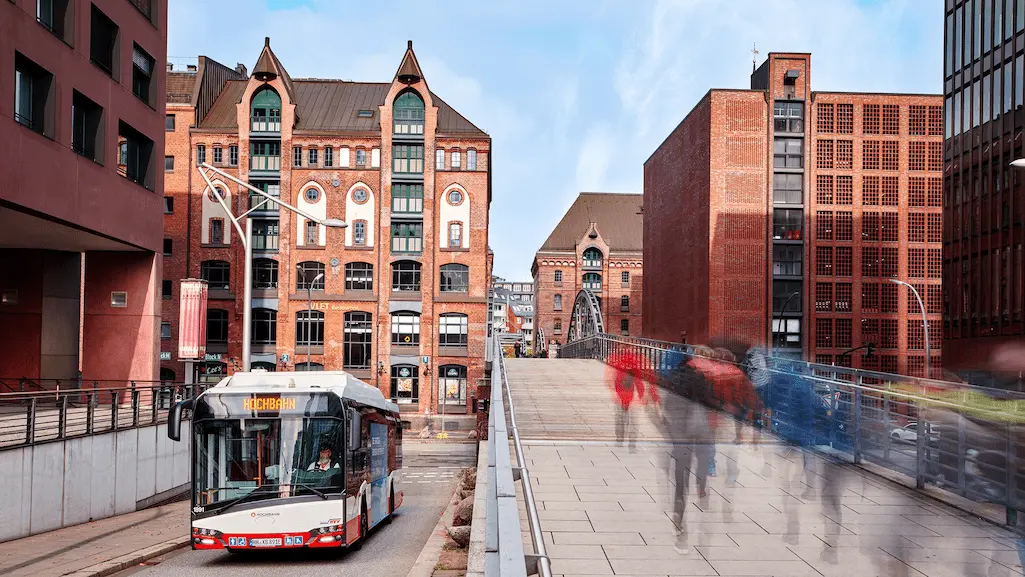
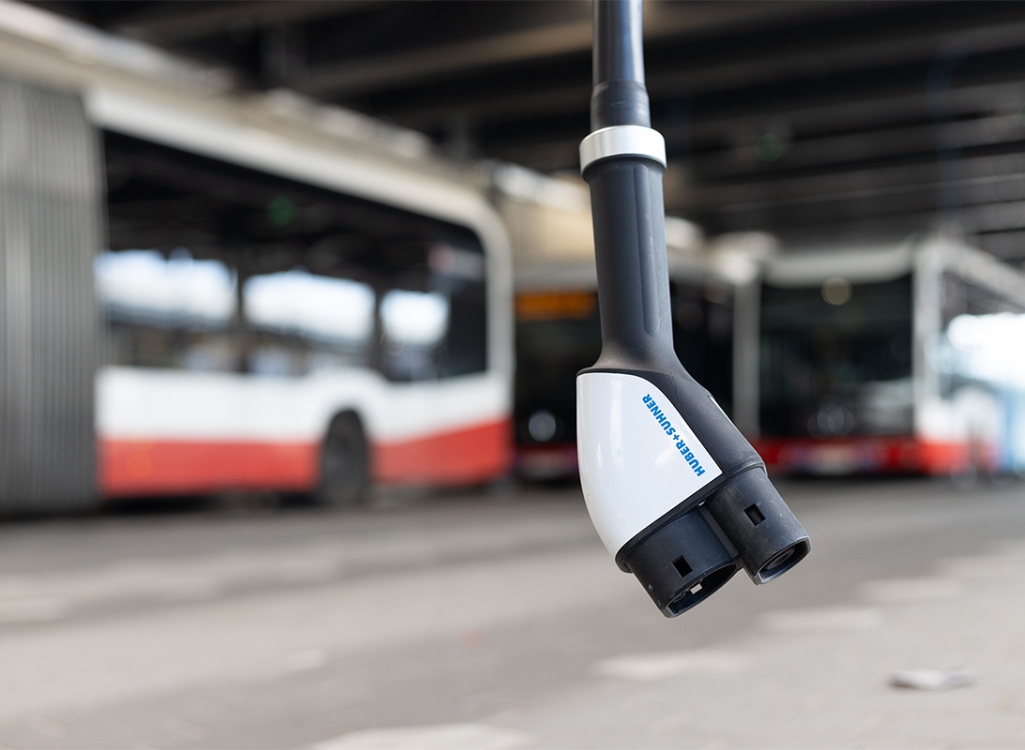
Hamburg aims to operate a fully zero-emission bus fleet by 2030, replacing around 1,100 diesel vehicles. Since 2020, Hamburg’s bus operators have only ordered emission-free buses, supported by investments in charging infrastructure and operational adaptation.
@ New Mobility Solutions
On-demand Services
Hamburg is advancing digital and autonomous mobility through a comprehensive strategy, with projects such as ALIKE and ahoi.
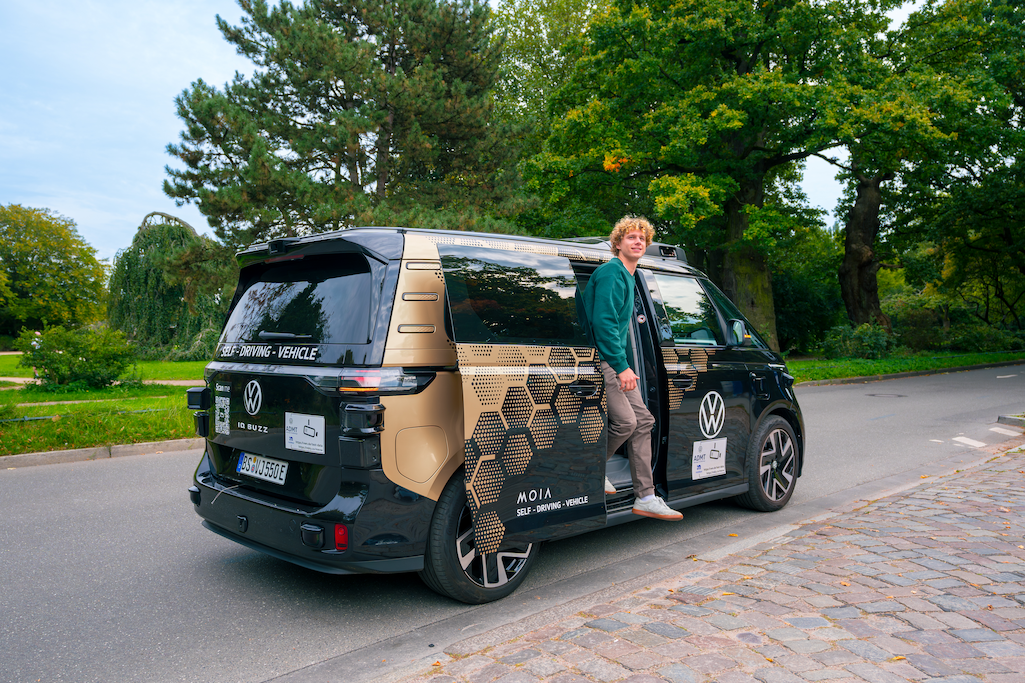
Both projects build on established on-demand projects: ALIKE includes MOIA’s largest electric ride-pooling service in Europe, with up to 330 vehicles and over 10 million rides since 2019. Ahoi builds on the hvv hop service that has provided on-demand services in suburban areas. With 48 vehicles and over 1.2 million users across all age groups, the service has proven successful. Both serve as a basis for integrating autonomous vehicles.
Subscribe and Stay Informed
Join our email list and be informed about the latest announcements, speaking opportunities, and tickets.